Learn how often to change baby bottles based on material type to keep your little one safe
You’ve carefully sterilized your baby’s bottles, measured every ounce perfectly, and mastered the feeding routine—but have you ever wondered if there’s an expiration date on those trusty bottles themselves? While baby bottles might seem like they last forever, knowing when to replace them based on their material is an important part of keeping your little one safe and healthy.
Different bottle materials have different lifespans, and understanding these timelines helps you make informed decisions about when it’s time for an upgrade.
Plastic bottles, which are the most common type, actually come in different varieties with varying replacement schedules.
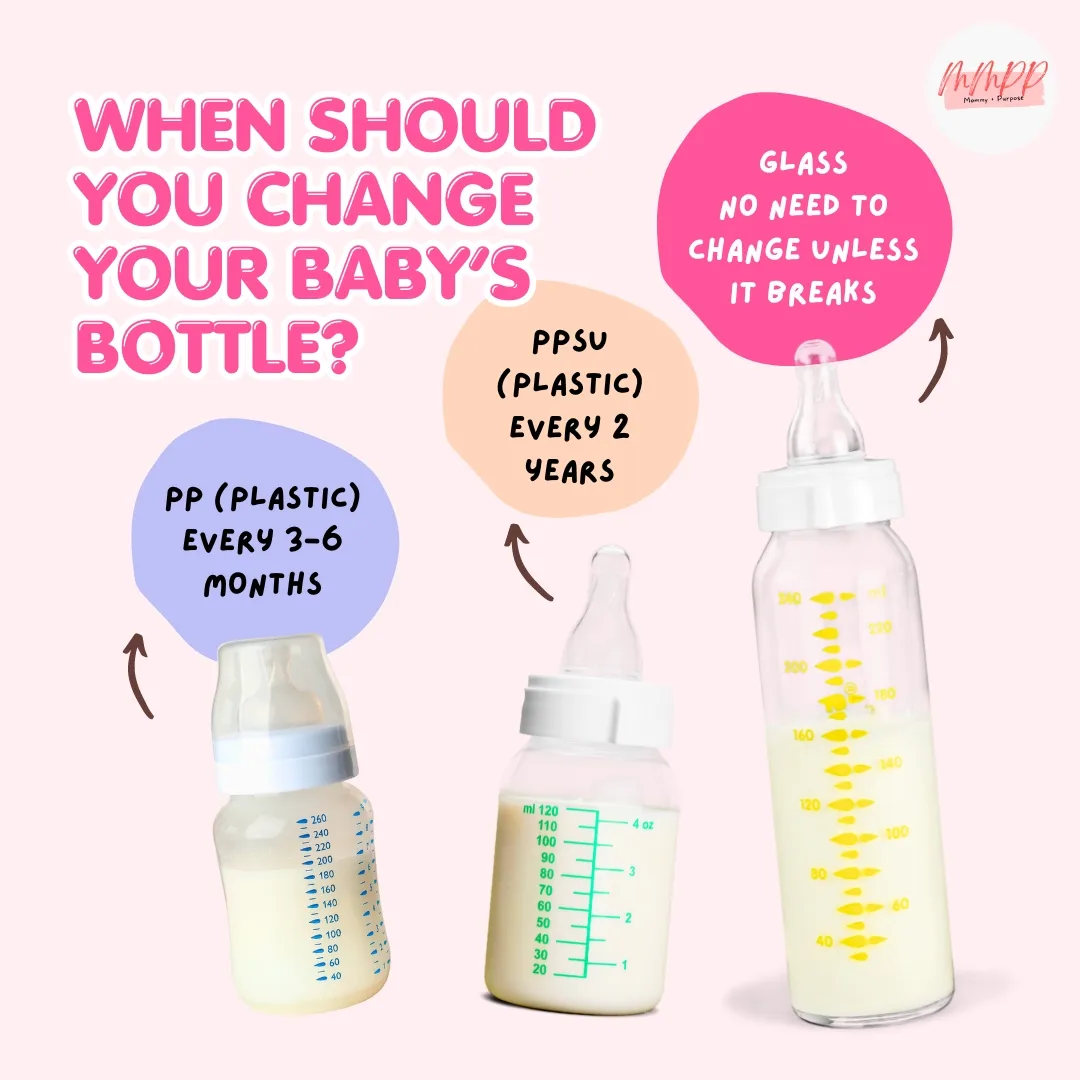
- PP (polypropylene) plastic bottles should be changed every three to six months, as they can develop tiny scratches and wear from regular washing and sterilizing that create spaces where bacteria might hide.
- PPSU (polyphenylsulfone) plastic bottles are more durable and can last up to two years, making them a longer-term investment despite often having a higher upfront cost.
- Glass bottles, on the other hand, are the marathon runners of the baby bottle world. These don’t need to be changed unless they actually break, crack, or chip. Glass doesn’t degrade over time, doesn’t absorb odors, and doesn’t develop the micro-scratches that plastic bottles do. This makes them incredibly hygienic and economical in the long run, though they do require more careful handling and are heavier for little hands to hold as babies grow.
Beyond the material-specific timelines, there are some universal signs that any bottle needs replacing sooner rather than later. If you notice cloudiness that doesn’t come off with washing, cracks, chips, or any discoloration, it’s time for a new bottle regardless of how long you’ve had it. The same goes for nipples and other bottle components—they should be inspected regularly for tears, thinning, or stickiness, and replaced at the first sign of wear. At Mommy Purpose, we understand that managing all these details while caring for a newborn can feel overwhelming, but creating a simple system can help. Consider marking your bottles with a date when you start using them or set a reminder on your phone for replacement times. Keeping a spare set on hand means you’re never caught without a safe bottle when it’s time to retire the old ones. Remember that these guidelines are about maintaining the highest standards of hygiene and safety for your precious little one, giving you peace of mind with every feeding.
Taking care of your baby means taking care of all the little details, and knowing when to replace bottles is just one more way you’re being an amazing parent. Trust your instincts, follow these guidelines, and remember that every small step you take is keeping your baby healthy and thriving.
#babybottles
#infantcare
#babysafety
#feedingguide
#parentingtips