

Learn the early, mid, and late hunger signals babies show to feed them before fussiness starts
You’re settling in for a quiet moment when your baby suddenly bursts into tears, and you wonder if you missed the signs that feeding time had arrived. Learning to spot hunger cues before the crying starts can transform those stressful moments into calm, connected feeding experiences.
Babies communicate their needs long before they cry, but many new parents don’t realize that tears are actually a late hunger cue rather than the first sign. When you understand the progression from early to late signals, you can respond when your little one is still calm and receptive, making feeding easier for both of you. The key is recognizing that hunger cues come in stages, each one slightly more urgent than the last. Early hunger cues are subtle and gentle. Your baby might start stirring from sleep, opening their mouth, or turning their head from side to side in a rooting motion. These quiet signals are your baby’s polite way of saying “I’m starting to feel hungry.” When you catch these early signs and offer a feed, your baby is relaxed and ready to latch or take a bottle easily. This is the ideal window for feeding because everyone is calm and the experience feels natural rather than rushed. As hunger builds, you’ll notice mid-level cues that are more obvious. Your baby may start stretching, increasing their movement, or bringing their hands to their mouth repeatedly. At this stage, the message has shifted to “I really need to eat now.” These movements are your baby’s way of escalating the communication when the early cues weren’t noticed.
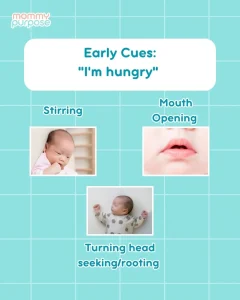

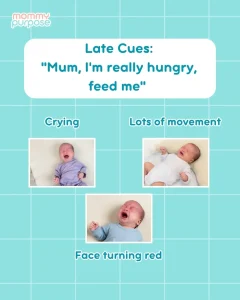
At Mommy Purpose, we find that parents who learn to recognize these middle signals can prevent most crying episodes related to hunger. Late hunger cues are the ones most parents recognize immediately because they’re impossible to miss. Crying, a red face, and lots of agitated movement all signal that your baby has moved past hungry into distressed. By this point, your little one may be so upset that they struggle to feed effectively, pulling away from the breast or bottle because they’re too worked up to settle. This is why waiting until crying begins often makes feeding more challenging and stressful than it needs to be. Every baby has their own unique communication style, but the pattern of escalating hunger cues is fairly universal. By observing your baby closely during the first few weeks, you’ll start to recognize their personal hunger signals and develop a rhythm that works for your family. The more you tune into these cues, the more confident you’ll feel in meeting your baby’s needs before frustration sets in for either of you.
Remember that learning your baby’s hunger language takes time and practice, so be patient with yourself as you figure out their unique patterns. Trust your instincts, watch for those early signals, and know that every feeding is an opportunity to strengthen your bond.
#newborncare
#feedingtips
#babysignals
#parentingadvice
#infantnutrition