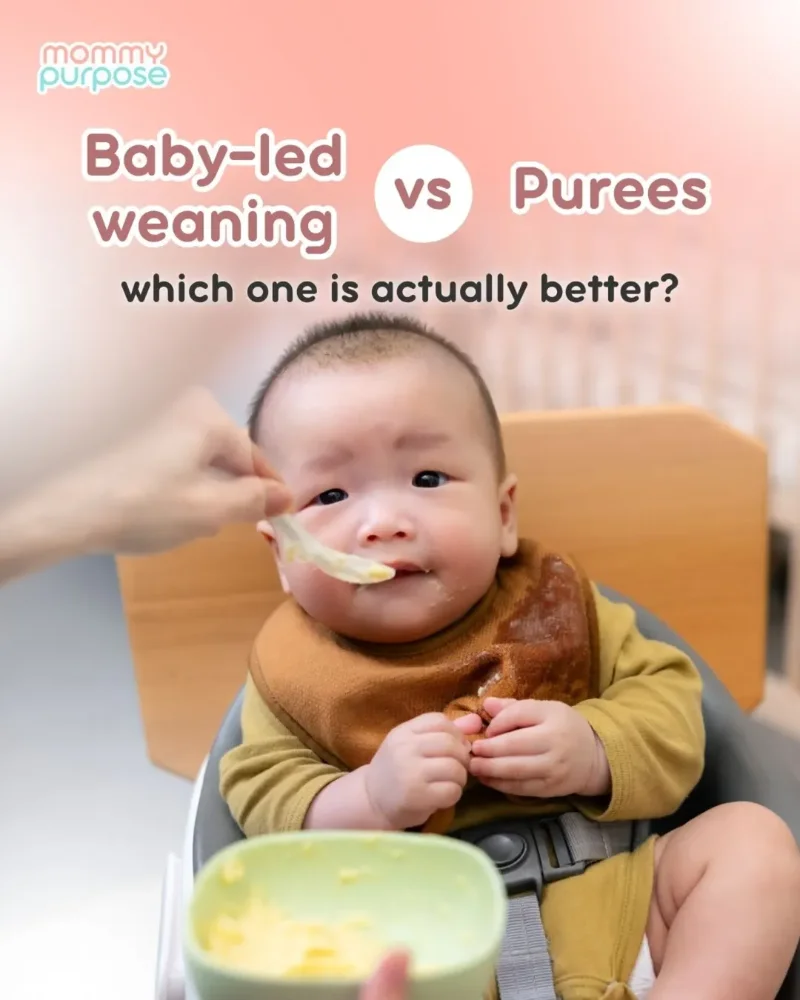
Discover the pros and cons of baby-led weaning vs. purees and find the best feeding method for your baby.
Deciding how to introduce solid foods to your little one can feel like navigating a maze, with so many options and opinions. Should you spoon-feed purees or let your baby take the lead with finger foods?
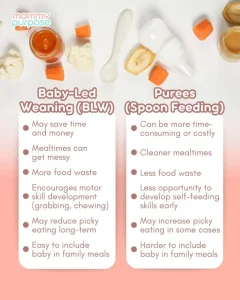
When it comes to introducing solids, two popular methods often come to mind: baby-led weaning (BLW) and purees (or spoon feeding). Traditionally, purees have been the go-to approach, where smooth, mashed foods are fed to the baby using a spoon. This method offers the advantage of easier portion control and tends to be less messy, making it great for beginners. While purees can be more time-consuming or costly if you’re buying pre-made jars, they generally result in cleaner mealtimes and less food waste. However, one potential drawback is that they might offer less opportunity for a baby to develop self-feeding skills early on and, in some cases, could increase picky eating as they grow.
On the other hand, baby-led weaning involves offering soft finger foods from the start, allowing the baby to feed themselves. This approach is rooted in letting the baby control how much they eat, fostering independence early on. BLW can be seen as potentially saving time and money in the long run as you’re preparing food for the family that baby can also eat with some modifications. While mealtimes can definitely get messy and there might be more food waste initially, BLW is fantastic for encouraging motor skill development, specifically grabbing and chewing. Many proponents suggest it may even reduce picky eating in the long term, and it certainly makes it easier to include your baby in family meals from an early age. It’s messy, but also incredibly great for exploration as little ones engage with their food through touch, smell, and taste.
At Mommy Purpose, we’ve observed that many parents choose not to stick to just one method. In reality, a significant number successfully combine spoon-feeding purees with offering finger foods for a mixed approach. This hybrid method leverages the best of both worlds – the control and less mess of purees alongside the independence and developmental benefits of BLW. For instance, parents might offer purees for main meals and introduce finger foods as snacks or alongside the main meal to encourage exploration.
Ultimately, the goal is to find what works best for your family and particularly for your baby. Some babies take to finger foods with enthusiasm, while others might prefer the predictability and comfort of purees. The most crucial aspects of introducing solids, regardless of the method chosen, are ensuring your baby is safe, growing well, and, most importantly, enjoying their food journey. Both methods have valid advantages and disadvantages and combining them can often lead to a well-rounded and positive feeding experience.
There’s no single “better” way; what matters is your baby’s unique needs and your comfort as a parent. Embrace this exciting stage with confidence, knowing you’re making the best choices for your little one.
#babyfood
#weaning
#babyledweaning
#purees
#babyfeeding